


Master How To Build A Personal Brand Online
Published April 29, 2026
You’re probably in one of two places right now. You’re either good at what you do but almost invisible online, or you’ve been posting here and there without any real strategy and wondering why it isn’t turning into leads, interviews, referrals, or recognition.
That gap matters more than one might assume. Two people can have similar experience, similar credentials, and similar work ethic. The one with a clear online presence usually gets trusted faster. Not because they’re more talented, but because buyers, recruiters, collaborators, and peers can understand who they are, what they do, and why they matter within minutes.
That’s what a personal brand does. It removes ambiguity.
Most advice on how to build a personal brand online starts with content. I think that’s backward. Content matters, but people judge credibility long before they read your third post or your long-form thread. They notice your photo, your profile headline, your consistency, your tone, and whether your presence feels intentional. If those signals are weak, your expertise has to work harder than it should.
Why Your Online Brand Is Your Most Valuable Career Asset
A personal brand isn’t vanity. It’s career infrastructure.
When someone hears your name, sees your LinkedIn profile, checks your website, or finds your posts, they’re deciding whether you look credible, relevant, and trustworthy. That decision happens before the call, before the interview, and before the deal discussion. If your digital presence feels neglected, people fill in the blanks for you.
That’s why this work has become hard to ignore. 44% of employers have hired candidates based on their personal branding content online, while 54% have rejected applicants due to a poor social media presence, according to these personal branding statistics. Hiring managers aren’t only evaluating resumes anymore. They’re evaluating digital judgment.
What your brand actually does
A strong online brand helps people answer four questions quickly:
- Who are you: What field, role, or expertise do you represent?
- What do you stand for: What principles or point of view shape your work?
- Who do you help: What audience or problem do you focus on?
- Why should someone trust you: What proof, clarity, and professionalism back it up?
If people can’t answer those questions after a quick scan of your profile, your brand is fuzzy.
Your personal brand is what reduces friction between your ability and someone else’s decision to trust you.
That’s true whether you’re a job seeker, consultant, founder, recruiter, designer, real estate agent, or team leader. People don’t just buy skill. They buy confidence in the person behind the skill.
What weak branding looks like
Weak personal branding usually isn’t dramatic. It’s subtle.
It looks like an outdated profile photo, a generic headline, no clear niche, random posts, and a website or portfolio that feels disconnected from your social profiles. Nothing is offensively bad. It just doesn’t add up to a memorable professional identity.
That's the actual cost. Obscurity is often the result of mixed signals, not lack of ability.
Start by Defining Your Brand Foundation
Before you post another update, tighten your foundation. This step is often overlooked because it feels less exciting than publishing content. It’s also the part that saves you from wasting months talking to the wrong audience in the wrong voice about the wrong topics.
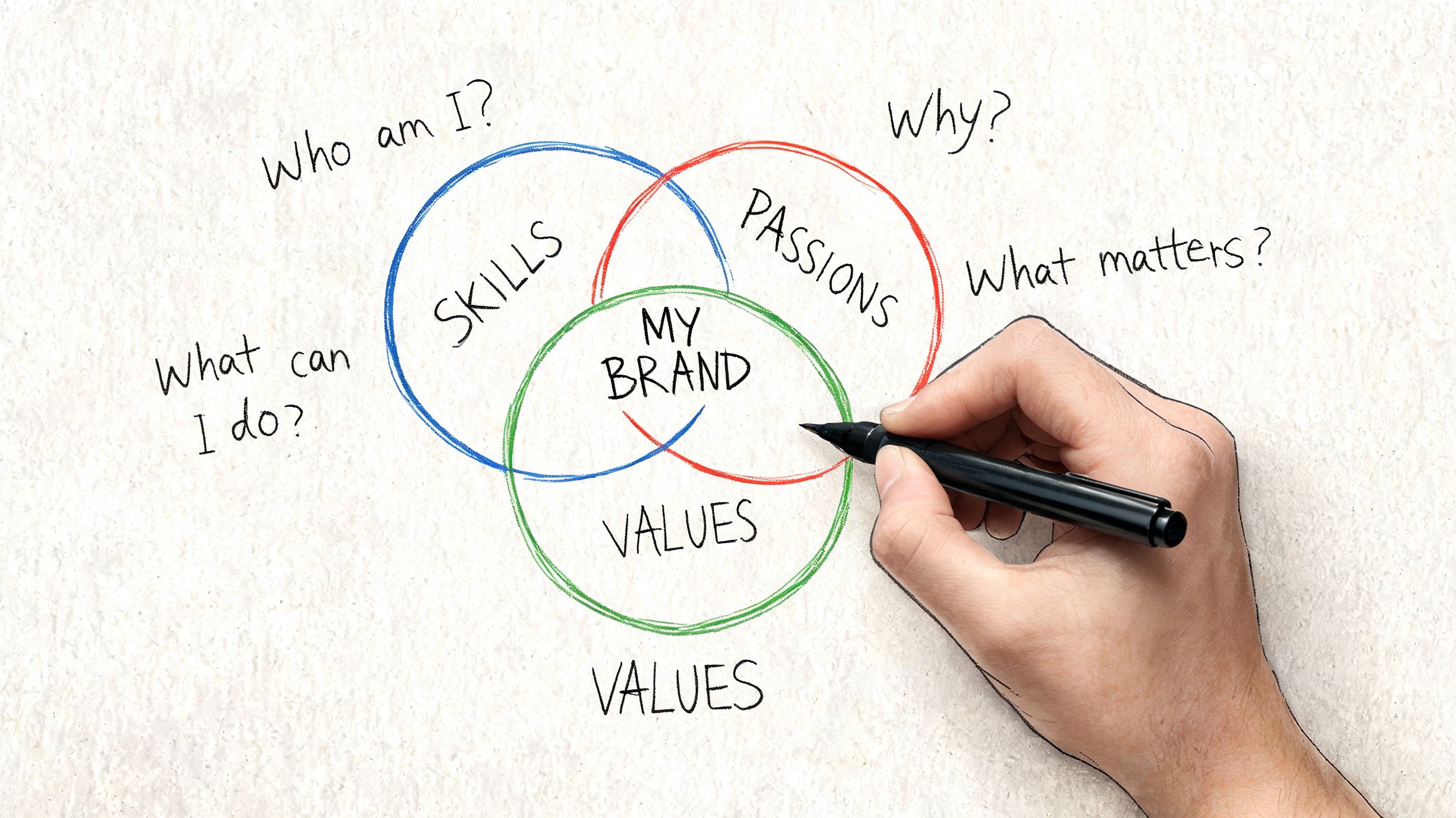
Find your intersection strengths
The cleanest way to start is with intersection strengths. Look for the overlap between:
- What you’re good at
- What you care enough to talk about repeatedly
- What people will seek help with
That overlap is your best starting niche. Not your forever niche. Your current one.
A lot of people choose topics that are too broad. “Leadership.” “Marketing.” “Wellness.” “Career growth.” Those are categories, not brands. A useful brand position is narrower and more specific to an audience.
Try this instead:
| Weak positioning | Stronger positioning |
|---|---|
| Marketing consultant | B2B SaaS messaging consultant for technical founders |
| Career coach | Career coach for operators moving into first-time leadership roles |
| Designer | Brand designer for wellness businesses launching premium offers |
| HR professional | People Ops leader focused on onboarding and team communication |
Notice what changes. The stronger version creates a picture.
Define the people you want to be known by
If you’re vague about your audience, your content becomes generic fast. Pick a real person type, not “everyone who could benefit.”
Write down:
Their role or stage
Mid-career project manager, startup founder, job seeker, independent consultant.Their immediate frustration
Low visibility, weak inbound leads, confusing profile, inconsistent team image, poor positioning.Their desired outcome
Better opportunities, stronger trust, more referrals, cleaner authority, higher-quality conversations.Your specific angle
What perspective do you bring that others don’t explain as clearly?
Practical rule: If your audience description could apply to millions of unrelated people, it’s too broad.
Write a one-sentence brand statement
You do not need a poetic manifesto. You need a sentence you can use across your bio, website, profile intro, and content planning.
Use this formula:
I help [specific audience] achieve [specific outcome] by focusing on [specific method or perspective].
Examples:
- I help technical founders clarify their messaging so buyers understand the value faster.
- I help job seekers present themselves more credibly online through stronger positioning and profile strategy.
- I help service professionals turn scattered expertise into a consistent authority brand.
This sentence will sharpen everything that follows.
Clarify your values before you publish
Trust doesn’t come only from expertise. It comes from alignment. 67% of Americans are willing to spend more on products and services from companies whose founders' personal brands align with their values, according to the Brand Builders Group study. That applies to solo professionals too. People pay attention to the person behind the offer.
Values don’t need to sound grand. They just need to be visible in how you communicate. Pick three that you can demonstrate. For example:
- Clarity over jargon
- Practicality over inspiration-only content
- Candor over polished but empty thought leadership
If you want a useful companion resource for turning those values into repeatable posting habits, this guide to social media branding gives a solid framework for keeping your messaging consistent without sounding robotic.
What usually goes wrong here
Three mistakes show up constantly:
- Copying someone else’s voice: Admiration turns into imitation fast.
- Positioning too broadly: You become forgettable because you sound interchangeable.
- Confusing biography with brand: Your life story matters, but your brand needs an immediate professional takeaway.
Your foundation should feel specific enough to guide action, but flexible enough to evolve as your work matures.
Craft a Professional Visual Identity and Digital Home
People say personal branding is about authenticity. True. But online, authenticity still has to look coherent.
If your LinkedIn photo feels corporate, your website feels minimalist and modern, your X profile uses a casual selfie, and your portfolio looks like it belongs to someone else entirely, people feel that mismatch immediately. They may not articulate it. They’ll just trust you less.
Start with your headshot, not your logo
A lot of professionals spend too much time thinking about logos and too little time fixing the one asset almost everyone will see first: their face.
That’s not superficial. It’s practical. A LinkedIn study found that profiles with professional headshots receive 21 times more views, as cited in this personal branding article. If your profile image looks outdated, cropped from a wedding, dimly lit, or inconsistent with your professional level, it weakens everything around it.
The old trade-off used to be simple. Either pay for a photographer or settle for mediocre images.
That’s changed. Modern AI headshot tools have made professional visuals accessible to people who don’t want the cost, scheduling hassle, or awkwardness of a studio session. That matters for individual professionals, but it matters even more for teams, founders, and client-facing staff who need consistency across multiple channels.
For practical setup advice before you generate or update portraits, this guide on how to take professional pictures is worth reviewing. The quality of your source images still affects the final result.
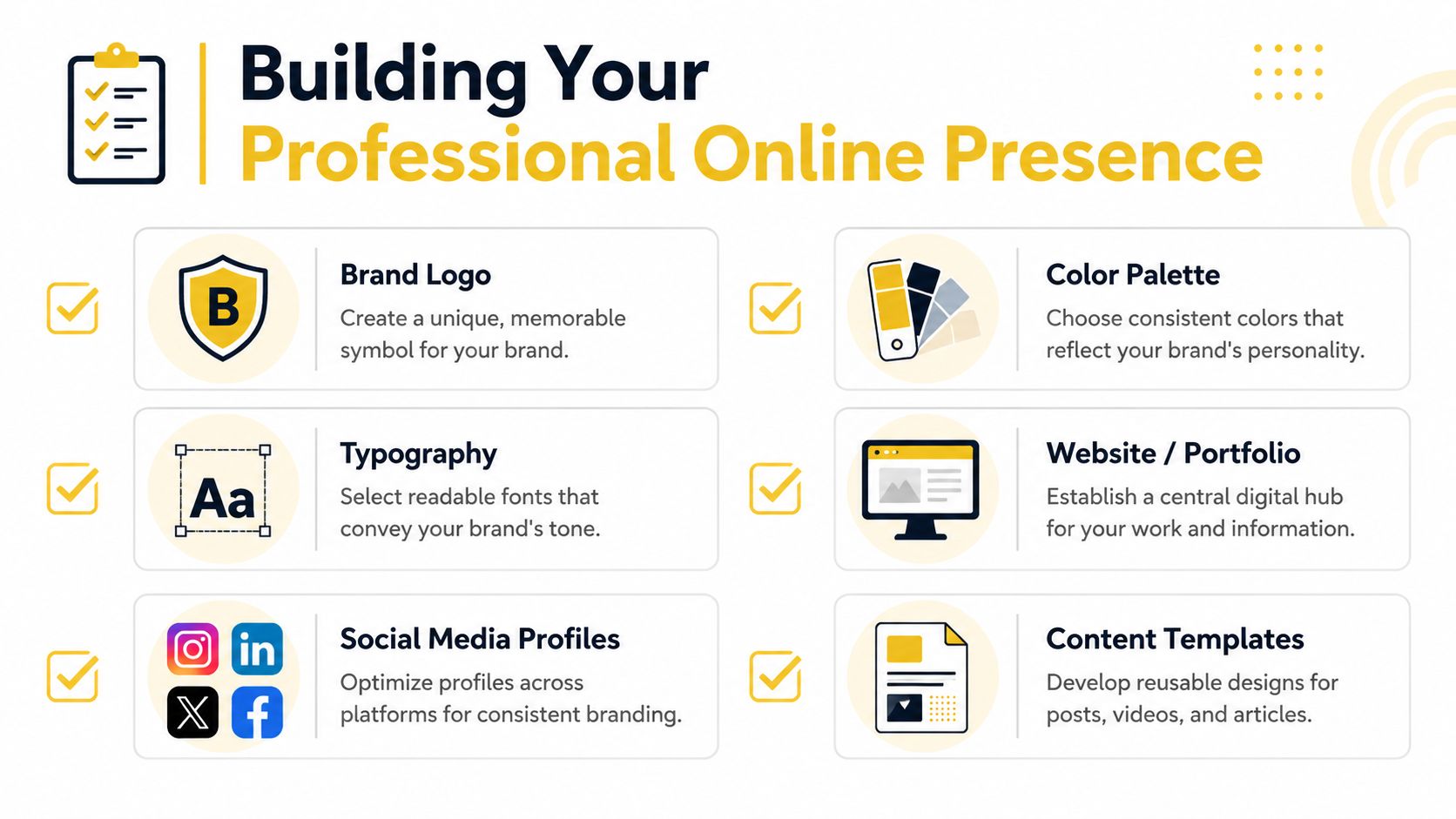
What a strong visual identity includes
You do not need a full brand package. You need a small set of repeatable choices.
Your visual minimum viable brand
- Headshot style: Choose one look that matches your field. Corporate, modern startup, creative professional, polished founder.
- Color palette: Pick two or three colors and use them repeatedly in banners, website accents, documents, and social graphics.
- Typography: One headline font and one body font is enough. Canva, Notion, Squarespace, and most website builders make this easy.
- Image treatment: Decide whether your visuals feel warm, high-contrast, clean and neutral, or editorial.
- Profile consistency: Use the same core photo and tone across LinkedIn, website, speaking bio, and portfolio.
If you want a deeper breakdown of why these repeated signals matter, this piece on brand consistency does a good job explaining how repetition builds recognition.
People don’t experience your brand one asset at a time. They experience the pattern.
Build a simple digital home
Your social profiles are rented space. Your website is your anchor.
That doesn’t mean you need a complex site. For most professionals, a strong digital home includes:
| Page | What it should do |
|---|---|
| Home | State who you help, how you help, and why it matters |
| About | Explain your point of view and relevant experience |
| Work or portfolio | Show proof, examples, projects, or outcomes |
| Content | Host articles, videos, insights, or resources |
| Contact | Make it easy to reach you |
Squarespace, WordPress, Webflow, and Carrd can all work. The best choice is the one you’ll maintain.
Real trade-offs to accept
Here, people often overcomplicate things.
A highly customized site can look impressive, but if it delays your launch for months, it’s the wrong move. A cheap DIY visual setup can work, but if every touchpoint looks different, it creates confusion. A polished headshot can enhance perception quickly, but if the rest of the profile is weak, it won’t carry the whole brand.
Aim for alignment, not perfection.
The fastest credible setup is usually this: one strong headshot, one clear profile headline, one simple website, one repeatable visual system, and one consistent short bio used everywhere.
Develop a Sustainable Content Flywheel
Many don’t fail at content because they lack ideas. They fail because they build a system that depends on constant inspiration.
That approach breaks fast. You post when you feel motivated, disappear when work gets busy, return with a random thought, then wonder why nothing compounds. Consistency isn’t mainly a discipline problem. It’s a design problem.
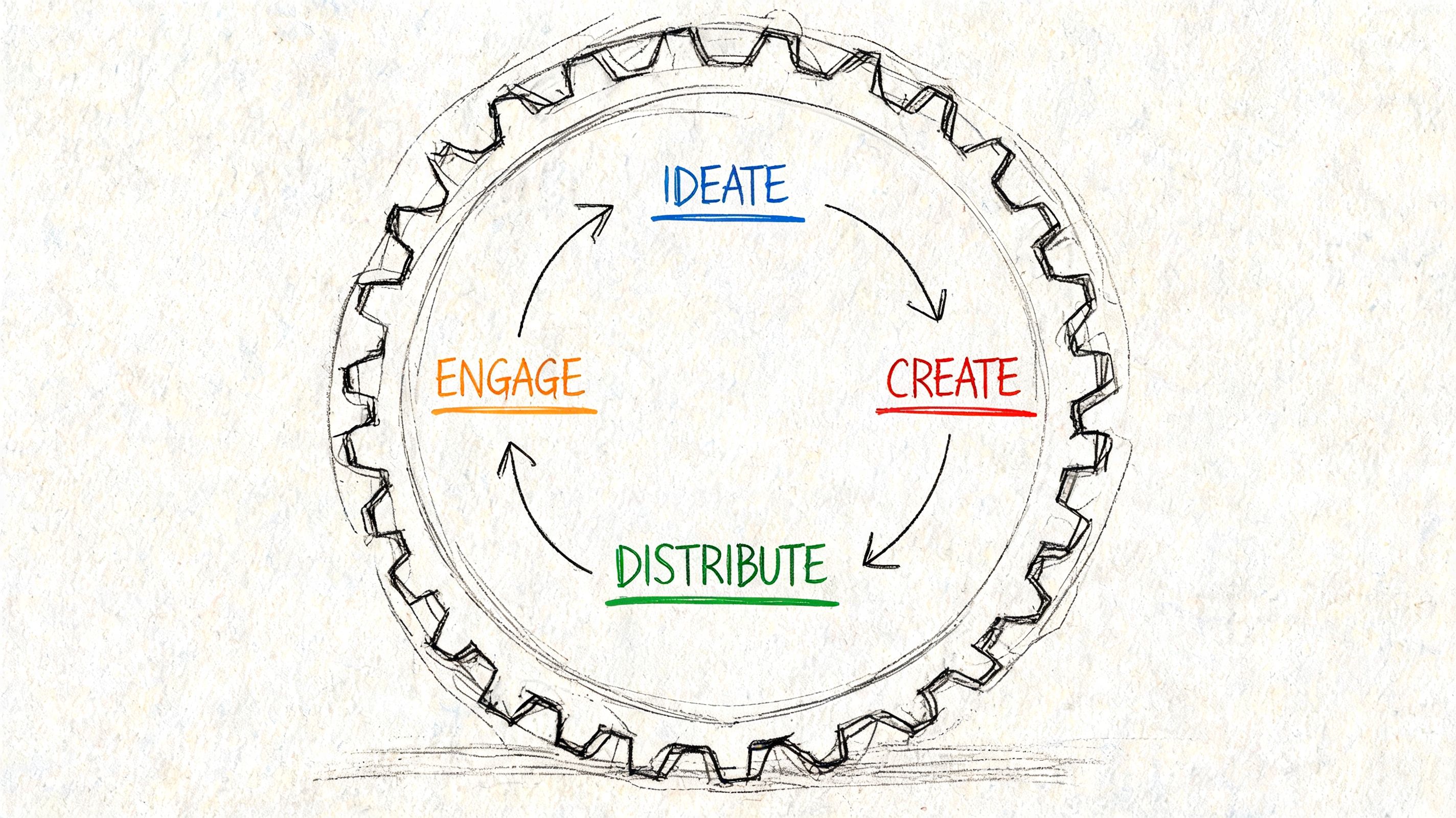
A better model is a content flywheel. You create a small number of useful ideas, shape them into core assets, distribute them in multiple formats, and use audience response to refine the next round. Done well, the system gets easier over time because each piece feeds the next.
Use three content pillars
Start with three recurring themes based on your brand foundation. Not ten. Three is enough to create variety without losing focus.
For example, if you’re a career strategist, your pillars might be:
- Profile positioning
- Interview credibility
- Career decision-making
If you’re a founder, they might be:
- Building in public
- Product lessons
- Leadership mistakes
These pillars should be broad enough to support repeated content, but narrow enough that followers know what to expect from you.
Reverse-engineer before you create
You do not need to invent your format from scratch. Study creators in your niche and analyze why certain posts perform well. The useful question isn’t “How do I sound like them?” It’s “What structure are they using that makes this easy to read, useful, and shareable?”
A step-by-step personal branding guide notes that a structured approach to content, including reverse-engineering high-engagement posts and using a rolling calendar, correlates with 40% faster audience growth and can help achieve up to 3x higher engagement rates compared to ad-hoc posting.
Look for patterns like:
- Strong opening lines that identify a specific problem
- Short, readable formatting
- One central lesson per post
- A concrete example instead of broad advice
- A clean ending that invites conversation
Build a two-week rolling calendar
A rolling calendar is simpler than a monthly content spreadsheet and more realistic than trying to plan a quarter ahead.
Try this structure:
| Day | Content type |
|---|---|
| Monday | Insight post |
| Wednesday | Practical tip or framework |
| Friday | Story, lesson, or opinion |
| Next Monday | Repurposed long-form idea |
| Next Wednesday | FAQ or myth-busting post |
| Next Friday | Reflection or case-based breakdown |
This rhythm works because it creates predictability without making your feed feel mechanical.
Don’t ask, “What should I post today?” Ask, “Which pillar needs another useful angle?”
Use waterfall distribution
One core piece of content should create multiple downstream assets.
A simple waterfall might look like this:
- Write a blog post on a recurring client problem.
- Turn the main points into a LinkedIn post.
- Pull one argument into an X thread.
- Convert the checklist into a carousel in Canva.
- Use one objection as a short video topic.
- Add the strongest lesson to your newsletter.
That’s how to build a personal brand online without turning into a full-time content machine. You stop treating every post as a fresh start.
A short visual explainer can help if you need a different lens on content planning:
What actually works and what doesn’t
What works:
- Repeating core ideas in fresh formats
- Publishing around real client questions
- Keeping a backlog of half-formed ideas in Notion, Apple Notes, or Google Docs
- Using Buffer, Later, or native schedulers to stay consistent
What doesn’t:
- Chasing every trend
- Posting broad motivational content with no practical takeaway
- Switching niches every few weeks
- Waiting until you “have more time”
A good flywheel reduces effort through structure. A bad one creates pressure through chaos.
Master Your Key Platforms with Platform-Specific Playbooks
A personal brand becomes weak when every platform gets the same content pasted with minor edits. The message may be the same, but the delivery can’t be identical. Different platforms reward different behavior, different pacing, and different forms of credibility.
If you’re trying to build authority with limited time, focus on a small number of channels and learn their native language.
LinkedIn for credibility and professional conversion
LinkedIn is where many professionals validate each other. It’s not just a networking site. It’s a public proof layer.
People use it to assess your seriousness, your communication, your positioning, and whether your professional identity is coherent. That means your profile matters as much as your posts.
If you need a tactical profile cleanup, these CV Anywhere tips to enhance LinkedIn are useful. For a more direct playbook on standing out, this guide on how to stand out on LinkedIn is also worth saving.
What performs well on LinkedIn
- Specific lessons from real work
- Clear opinions with professional relevance
- Before-and-after thinking
- Practical frameworks
- Short case-based reflections
- Comments that add substance to other people’s posts
A good LinkedIn post usually sounds like an experienced operator sharing something learned in the field.
Example LinkedIn post angle
You don’t need a better headline because “personal branding is important.”
You need a better headline because recruiters and buyers scan your profile in seconds and decide whether you’re relevant.
A weak headline lists a role. A strong headline signals value, audience, and expertise.
Try rewriting yours around who you help and how.
That works because it’s useful, specific, and easy to apply.
X for point of view and conversation
X moves faster. It rewards sharper ideas, faster reactions, stronger takes, and more frequent participation in active conversations.
That doesn’t mean you need to become provocative. It means your writing has to get to the point quickly. Brevity forces clarity. It’s a good training ground for developing a recognizable point of view.
What performs well on X
- Strong single ideas
- Short threads with a clear argument
- Contrarian but defensible observations
- Responses to live conversations in your niche
- Repeatable micro-lessons
Example X post angle
Individuals often don’t have a visibility problem. They have a clarity problem. If a stranger lands on your profile and can’t tell who you help, they won’t do the work to figure it out.
This works on X because it’s concise and framed as a strong observation.
A simple comparison
| Platform | What people expect | Best content style | Common mistake |
|---|---|---|---|
| Credibility and usefulness | Professional insights, lessons, frameworks | Sounding corporate and vague | |
| X | Perspective and interaction | Sharp takes, short threads, active replies | Copy-pasting LinkedIn posts |
| Personal website | Depth and proof | Articles, portfolio, bio, contact path | Treating it like a static brochure |
The trade-off most people resist
Mastering a platform often means leaving reach on the table somewhere else.
You can’t optimize every channel at once without diluting quality. A focused LinkedIn strategy with occasional X support usually outperforms a scattered presence on six platforms. The better move is to choose the room where your audience already pays attention and become recognizable there first.
Amplify Your Reach and Measure Your Impact
Posting alone rarely builds authority. Distribution and feedback loops do.
A lot of professionals publish solid content, then stop at the hardest moment. They wait for discovery to happen passively. That’s too slow. If you want your brand to grow, you have to create signals that help the right people encounter your work repeatedly.
Reach grows through participation
One of the most reliable habits is active engagement in your niche. Comment on relevant posts. Join conversations in communities where your audience already gathers. Respond to questions with substance, not self-promotion. Share other people’s useful work when it aligns with your perspective.
A simple rule works well here: spend more time participating than broadcasting.
That also improves your writing. You hear the language people use, the objections they raise, and the questions they ask when they’re being honest rather than polished.
Authority grows faster when other people experience you as helpful before they experience you as promotional.
Track a small set of useful indicators
You don’t need a giant dashboard. You need a few metrics that tell you whether your brand is becoming clearer and more compelling.
Watch for:
- Profile views or profile visits: Are people curious enough to learn more?
- Engagement quality: Are comments thoughtful, relevant, and from the right audience?
- Inbound conversations: Are people reaching out for opportunities, introductions, or questions?
- Content saves and shares: Which ideas people think are worth revisiting or passing on
- Website behavior: Which pages hold attention and which pages lose it quickly
LinkedIn analytics, native platform insights, Google Analytics, and simple UTM tracking are enough for most professionals.
A digital authority article referencing Digital Marketing Institute benchmarks notes that 62% of executives report career acceleration from consistent online authority, and that authority is built by amplifying content and tracking metrics for continuous improvement.
Run a weekly review
Keep this light. Open your analytics once a week and answer four questions:
- Which post got the strongest response from the right people?
- What topic or framing caused that response?
- Which post underperformed, and was it a topic problem or a packaging problem?
- What should I repeat, refine, or stop next week?
This review matters because most content failure isn’t about low quality. It’s about poor signal reading. A useful idea can flop because the hook was weak. A shallow post can perform because the timing was right. Looking at patterns over time keeps you from overreacting to one good or bad result.
Your Personal Branding Toolkit and Action Checklist
A personal brand gets stronger when you make it operational. The difference between professionals who become recognizable and those who stay stuck usually isn’t talent. It’s execution with a repeatable system.
Your action checklist
- Define your positioning: Write your one-sentence brand statement and choose your three content pillars.
- Choose your audience: Name the exact people you want to be known by and the problem they associate with you.
- Fix your visuals: Update your headshot, banner, bio, and profile consistency across platforms.
- Launch a digital home: Build a simple website or portfolio with an about page, proof, content, and contact path.
- Create a content rhythm: Use a two-week rolling calendar instead of improvising every post.
- Repurpose intentionally: Turn each strong idea into multiple assets across your main channels.
- Engage consistently: Comment, reply, and participate in niche conversations.
- Review performance weekly: Keep what works. Cut what confuses. Improve packaging.
A practical toolkit
Here’s a lean stack that is generally effective:
| Need | Tool options |
|---|---|
| Headshots | AI headshot tools, plus this roundup of best headshot apps |
| Graphics and carousels | Canva |
| Content planning | Notion, Google Docs, Apple Notes |
| Scheduling | Buffer, Later |
| Website | Squarespace, WordPress, Webflow, Carrd |
| Analytics | LinkedIn analytics, native platform insights, Google Analytics |
Keep the stack small
The best toolkit is the one you’ll use every week. Too many tools create friction. Friction leads to inconsistency. Inconsistency makes your brand feel accidental.
If you’re serious about learning how to build a personal brand online, start with fewer moving parts. Clear positioning, professional visuals, one main platform, one home base, one planning tool, one review habit. That setup is enough to create momentum.
Frequently Asked Questions About Personal Branding
How long does it take to build a personal brand online
Longer than desired, and usually faster than it feels while you’re doing it.
You’ll often notice small signals first. Better conversations. More profile views. Clearer recognition from peers. Tangible opportunities usually follow consistent clarity, not random bursts of posting. The professionals who win here tend to treat personal branding like a compounding asset, not a campaign.
Can you monetize a personal brand without being an influencer
Yes. Many strong personal brands monetize through consulting, coaching, speaking, recruiting opportunities, advisory work, services, digital products, or partnerships. You don’t need celebrity-level reach. You need trust from the right audience.
The mistake is trying to monetize too early with weak positioning. Build authority first. Then attach offers that fit what people already know you for.
What if I hate self-promotion
Those who say this don’t hate promotion. They hate bad promotion.
You don’t need to posture or pretend. Share useful ideas. Explain your process. Document lessons. Show proof. Offer clarity. That’s not ego. That’s service with visibility attached.
What do I do if someone criticizes me publicly
Separate useful criticism from noise.
If the feedback is fair, respond calmly or improve the work. If it’s bad-faith trolling, don’t let it dictate your strategy. Personal branding requires visibility, and visibility attracts commentary. The goal isn’t universal approval. The goal is professional trust with the people who matter.
Do I need to be on every platform
No. You need to be easy to understand in the places where your audience already looks. For many professionals, one primary platform plus a website is enough. Breadth feels productive, but depth usually creates stronger recognition.
A polished online brand starts with a polished first impression. If your current photos make you look less credible than you are, FaceJam makes it easy to turn everyday selfies into professional headshots for LinkedIn, resumes, portfolios, and team directories without booking a photographer. It’s a practical shortcut for anyone who wants stronger visual consistency across their personal brand.


