


Headshots for Authors: A Practical How-To Guide (2026)
Published May 4, 2026
You’ve finished the manuscript, handled edits, survived the cover conversation, and then someone asks for your author photo. For a lot of writers, that’s the moment confidence drops. The book is real. The public version of you is about to become real too.
That photo isn’t a side task. It’s part of how readers, agents, event organizers, podcasters, booksellers, and media contacts decide whether you look established, relevant, and consistent with the work you publish. Before anyone reads your first line, they often see your face on Amazon, Goodreads, your website, a speaker page, or the back cover.
A weak photo creates friction. A strong one does the opposite. It makes you look like the author readers expected to find.
Your Author Headshot Is Your Most Important Marketing Tool
Most authors treat the headshot like admin. Upload something decent, crop it, move on. That usually leads to a photo that feels random, dated, or disconnected from the rest of the author brand.
A better approach is to treat your headshot as a working asset. It sits alongside your cover, your bio, and your website copy. If you need a quick refresher on how all those pieces fit together, Novelium’s author platform glossary is useful because it frames the headshot as one component of a larger public presence, not a standalone image.
A professional headshot doesn’t have to look stiff. In fact, the old studio portrait with forced posture and generic lighting often works against authors. Readers respond better to images that feel intentional and aligned. A thriller author can look sharp and intense. A romance author can look open and warm. A business writer can look credible without looking cold.
There’s also more than one way to get there now. Some authors still need a photographer. Some can get excellent results with a phone, good light, and a clear brief. Others use AI to create polished options that would have taken far more time and coordination a few years ago. If you want a baseline definition of what separates a casual photo from a usable brand asset, this guide on what counts as a professional headshot is a solid starting point.
Your headshot doesn’t need to make you look glamorous. It needs to make you look publishable.
That standard is much more achievable, and much more useful.
Define Your Headshot Goals and Author Brand
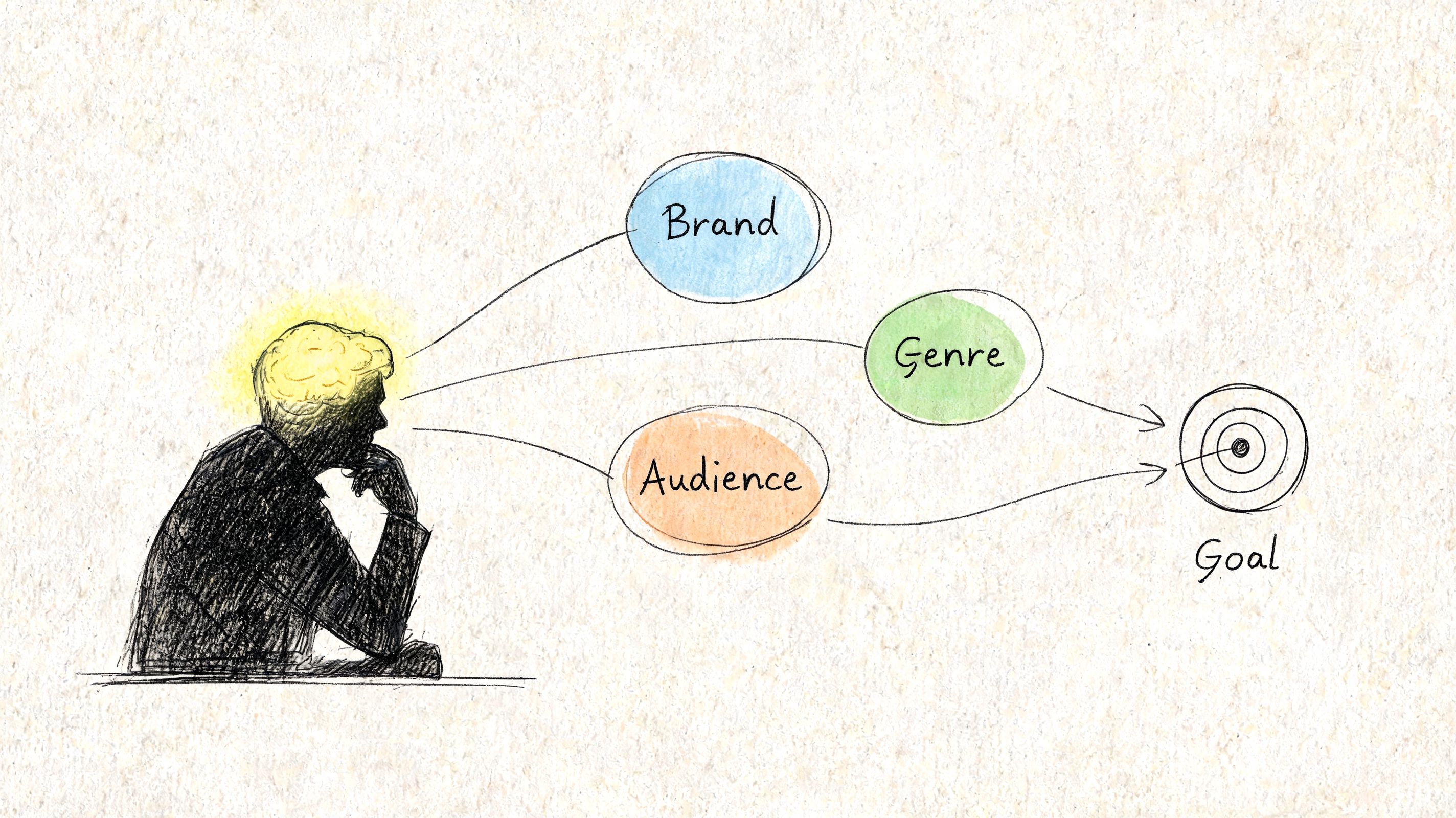
A good author photo starts before the camera comes out. You need to know what the image is supposed to communicate.
Start with genre, not your personal taste
Authors often choose a headshot based on what they personally like. That’s understandable, but it’s not the best filter. The better question is this: what should a stranger feel when they see your photo next to your book title?
Look at authors who sell to the same kind of reader you want. Search Amazon. Browse Goodreads. Save headshots from writers in your lane. You’re not copying them. You’re learning the visual language of your category.
Pay attention to patterns such as:
- Expression: serious, warm, playful, authoritative, thoughtful
- Cropping: tight headshot, chest-up portrait, three-quarter pose
- Wardrobe: structured jacket, soft knit, dark monochrome, casual layers
- Background: plain studio, outdoor blur, bookshelf, office, textured wall
- Lighting: soft and open, dramatic and shadowed, bright and commercial
A crime writer with a bright beach snapshot usually creates confusion. A children’s author with a severe boardroom portrait can feel equally off. The headshot should support the promise of the book.
Write a brief for yourself
Even if you’re shooting the image yourself, create a short creative brief. Keep it simple. A few lines is enough.
Include:
- Your genre and subgenre
- Three words you want the image to signal
- Where the photo will appear most often
- What you don’t want it to look like
- Two or three reference images
Often, headshots for authors go wrong. The author knows they need a photo, but they haven’t defined the job the photo needs to do.
The same logic applies if you’re building a broader public identity online. If that piece feels fuzzy, review this article on how to build a personal brand online. It helps connect your visual choices to how readers and industry contacts experience you.
Non-fiction and academic authors need a different answer
Most author photo advice is built around fiction. That leaves a gap for business authors, historians, academics, self-help experts, and specialists publishing serious non-fiction.
That gap matters. Publisher’s Weekly 2025 analysis, cited here, found that non-fiction author headshots with confident direct gaze and neutral backgrounds boosted Amazon bio clicks by 28% compared with artistic styles, while fewer than 10% of DIY guides addressed this. That’s why so many smart non-fiction authors end up with photos that look pleasant but not authoritative.
Practical rule: If your book asks readers to trust your expertise, your photo should reduce ambiguity, not add atmosphere.
For non-fiction, the safest strong option is often a direct gaze, controlled expression, simple backdrop, and clothes that suggest competence without trying too hard. Think expert first, creative second.
For fiction, you usually have more room to lean into tone. Literary fiction can support more mood. Speculative fiction can carry more personality. Romance can feel approachable and bright. But even then, clarity beats gimmicks.
A useful test is to ask: if this image appeared next to my book on a retailer page, would the right reader feel an immediate fit?
If the answer is “maybe,” refine the brief before you take a single photo.
Choose Your Path Pro Photographer DIY or AI
An author spends $700 on a polished studio session, then keeps using an older cropped Facebook photo because the new shots feel stiff. Another author uses a phone, a window, and a tripod, gets one clean image that fits the book, and sees it perform better everywhere. I have seen both outcomes more than once.
The method matters less than the match between the method and the job. Budget matters. Time matters. So does your tolerance for retakes, decision fatigue, and technical setup. Authors do best when they choose the path that fits their stage, then execute it well.
The three practical routes
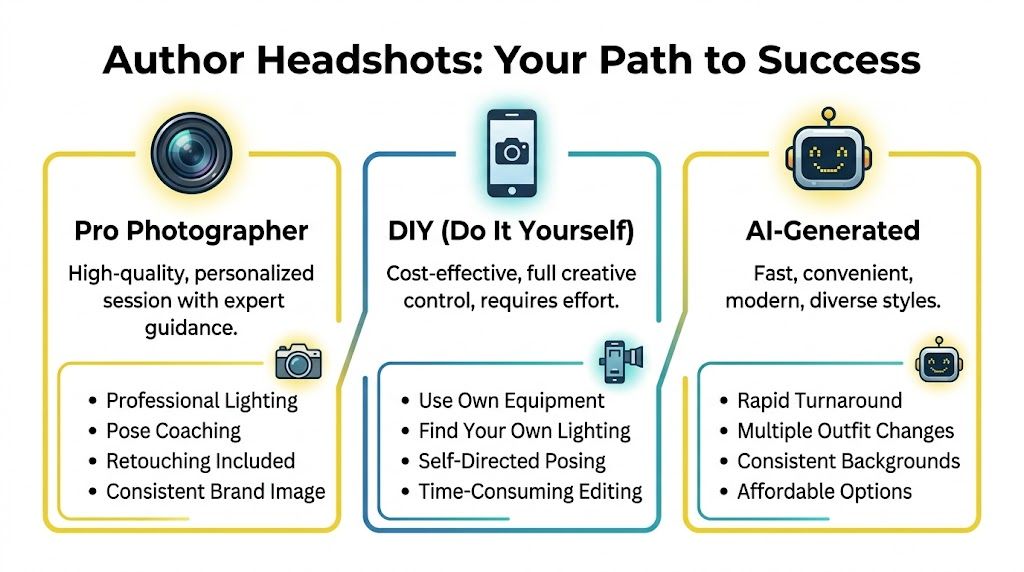
Each option solves a different problem.
| Path | Best for | Main upside | Main risk |
|---|---|---|---|
| Pro photographer | Authors with a launch budget, media needs, or low tolerance for trial and error | Expert direction and polished files | Cost and scheduling |
| DIY | Authors with time, decent light, and a good eye for selection | Lowest cost and full control | Uneven quality and weak curation |
| AI-generated | Authors who want speed, variety, and a lower-cost upgrade from DIY | Fast turnaround and multiple usable looks | Output quality depends on source photos and prompting |
When a photographer is the right call
A good portrait photographer does more than press the shutter. They correct posture, catch tension in the face, adjust angles, and keep the session aligned with how you need to be perceived. For authors with speaking gigs, media outreach, bookstore events, or a traditional publicity push, that guidance can save a lot of rework.
It is also the safest path for authors who know they get awkward on camera. Paying for direction is often smarter than paying for retakes.
Cost still has to make sense inside the larger marketing plan. I often tell authors to compare the photo budget against the rest of the launch budget, especially if they also need website work, retailer optimization, ads, or email setup. If you’re trying to place the photo inside a broader budget, a page like digital marketing services and pricing can help you benchmark priorities.
When DIY is the smart move
DIY succeeds when the setup is simple and the standards are high. It fails when authors guess, rush, or keep the first decent frame instead of the best one.
A workable DIY setup is not complicated. Use soft window light. Keep the camera at eye level. Choose a plain background. Take far more shots than you think you need, then cut hard. If your shirt fights for attention or the room looks busy, start over.
This route is often enough for early-stage authors, website bios, guest posts, newsletters, and social profiles. It is also a good source-photo strategy for AI, because clean DIY images usually produce better generated results than random old selfies. If you need help choosing clothing that photographs cleanly, this guide to professional headshot outfit choices is useful.
When AI is the best middle ground
AI headshots fill the gap between a full live shoot and a purely DIY image. That is why more authors are using tools like FaceJam. The appeal is practical. You can get multiple styles fast, test different levels of formality, and create versions for retailer pages, podcast bios, speaking one-sheets, and social platforms without booking another session.
The biggest mistake with AI headshots isn’t using AI. It’s feeding the system weak source photos and expecting it to fix bad lighting, poor wardrobe, or a vague brand.
Used well, AI gives authors a modern workflow instead of a gimmick. Start with clear source images. Choose references that match your genre and market position. Reject outputs that look too perfect, too glossy, or slightly off around the eyes and hands. The best AI headshots usually come from authors who already know what they want the image to say.
A simple decision filter
Choose the path that reduces your biggest risk.
- Pick a photographer if you need expert direction, polished files, and a low chance of missing the mark.
- Pick DIY if money is tight, you can follow a clear setup, and you are willing to shoot plenty of options.
- Pick AI if you need speed, multiple variations, and a professional result without arranging a live session.
Authors do not win points for choosing the fanciest method. They win when the final photo looks credible, current, and consistent with the book they are asking people to buy.
Nail the Details Wardrobe Posing and Expression
A weak headshot usually fails on small choices. The shirt fights for attention. The smile looks pasted on. The pose stiffens the shoulders and shortens the neck. I’ve seen authors spend heavily on a shoot, or generate dozens of AI options, then end up with an image that still looks uncertain because these details were never handled.
Wear clothes that support your face
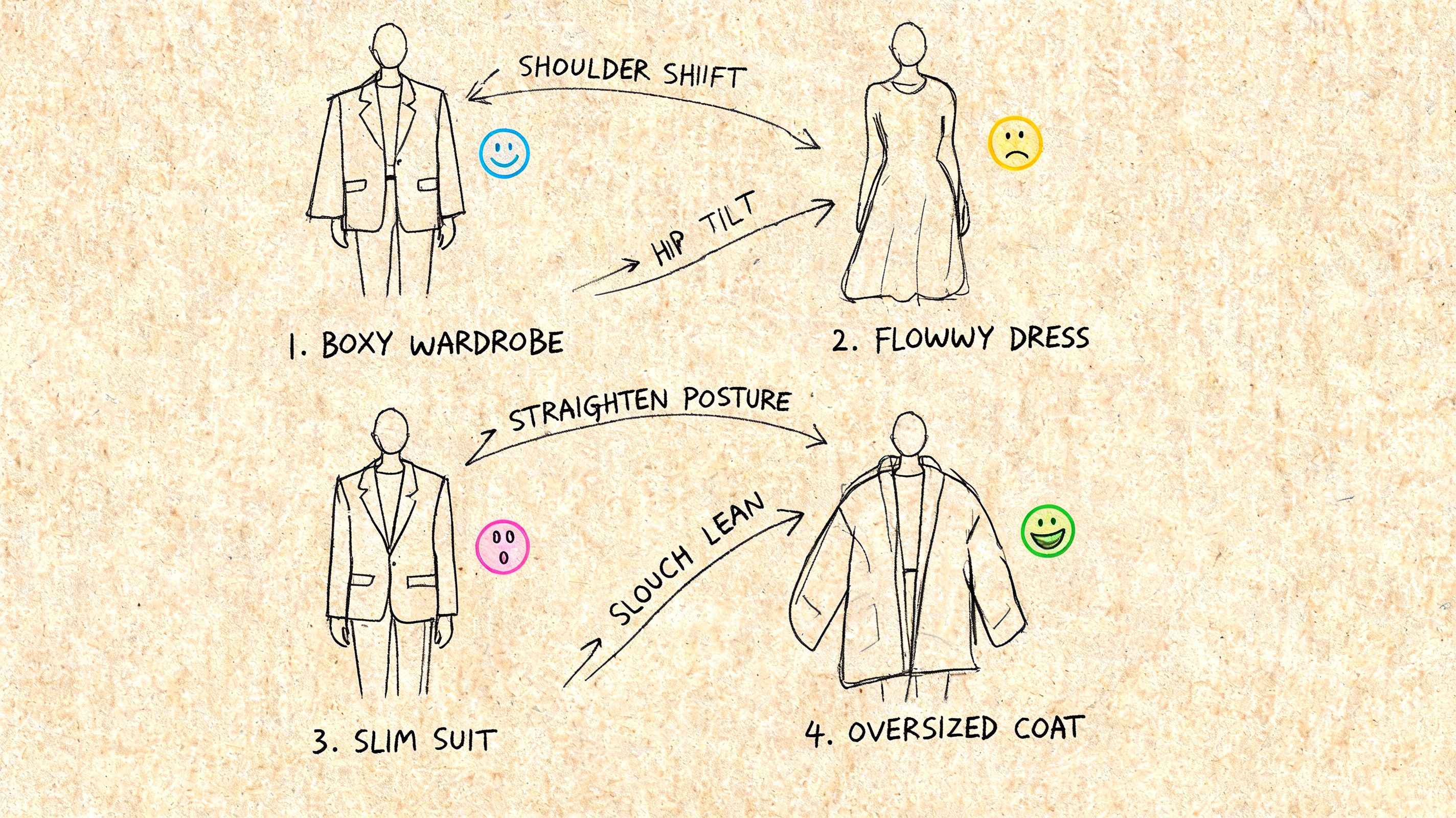
The job of wardrobe is simple. Keep attention on your face and reinforce the kind of author you are.
Good choices usually share a few traits:
- Solid or quiet colors: They keep the image clean and hold up across retailer pages, media kits, and social profiles.
- Clear structure: Jackets, knit tops, collared shirts, and simple necklines usually photograph better than fussy or shapeless clothing.
- Low distraction: Loud prints, statement jewelry, and novelty details date the photo fast.
- Category fit: A business author often benefits from sharper structure. A novelist or poet may suit softer texture and slightly less formal styling.
If you want practical examples, this guide to professional headshot outfit choices for different settings is useful.
Black and white can work, but both are less forgiving than authors expect. Black can lose detail in low light. White can reflect badly and pull focus. Mid-tones, jewel tones, earthy neutrals, and muted shades are easier to control. For live shoots, bring two or three options. For AI headshots, choose source photos and style references that show clothes you would wear at an event, on a panel, or in an author bio.
Pose like an author who knows why they’re there
The best pose usually feels understated. That’s the point.
Authors often tense up because they think they need to look impressive. The camera reads that as stiffness. The fix is mechanical, not emotional. Set your posture first, then let the expression do the rest.
Start here:
- Sit or stand tall, with length through the spine.
- Let the shoulders drop and widen naturally.
- Bring the forehead slightly forward.
- Turn the body a few degrees if straight-on feels too formal.
- Keep hands out of frame unless they clearly add something.
These are small corrections, but they change the entire image. A slight turn gives shape to the torso. A small forward lean creates presence. Too much tilt, too much chin lift, or too much “casual” slouch usually makes the photo look amateur or dated.
A good author headshot looks composed and alert.
Match the expression to the promise of the book
Expression carries brand faster than wardrobe. Readers decide a lot from the eyes, mouth, and overall energy before they notice anything else.
The right expression depends on what you write and who you need to reach. Serious nonfiction, history, politics, and many thriller categories usually benefit from steadiness and control. Romance, book club fiction, and personal development often work better with visible warmth. Memoir and literary fiction can carry a quieter, reflective look if it still feels engaged rather than distant.
The common mistake is forcing a generic photo smile. It flattens the face and weakens credibility. A better approach is to choose the feeling first. Calm authority. Warm intelligence. Curiosity. Reassurance. Then let that feeling shape the expression.
Retouching needs restraint too. I’ve seen authors reject perfectly good images because they wanted every line removed. That usually backfires. Over-smoothed skin, overly bright eyes, and plastic texture make a headshot less believable in both traditional photography and AI-generated versions. FaceJam and similar tools can produce polished results, but the strongest images still look like a real person on a good day, not a synthetic ideal.
A quick genre-fit cheat sheet
| Author type | Usually works | Usually fails |
|---|---|---|
| Thriller or crime | Direct gaze, darker tones, contained expression | Big cheerful smile with bright casual styling |
| Romance | Open posture, friendly expression, softer palette | Severe pose, cold lighting |
| Business or self-help | Neutral background, clear eye contact, structured outfit | Overly artistic crop or moody styling |
| Academic | Thoughtful but direct, understated wardrobe | Staged “creative” look that weakens authority |
| Children’s author | Warmth, approachability, lively but controlled energy | Stiff corporate portrait |
If you’re choosing between several good images, pick the one that feels current, believable, and easy to place beside your book cover. That standard works whether the photo came from a photographer, a DIY setup, or an AI workflow.
The Modern Workflow with AI-Generated Headshots
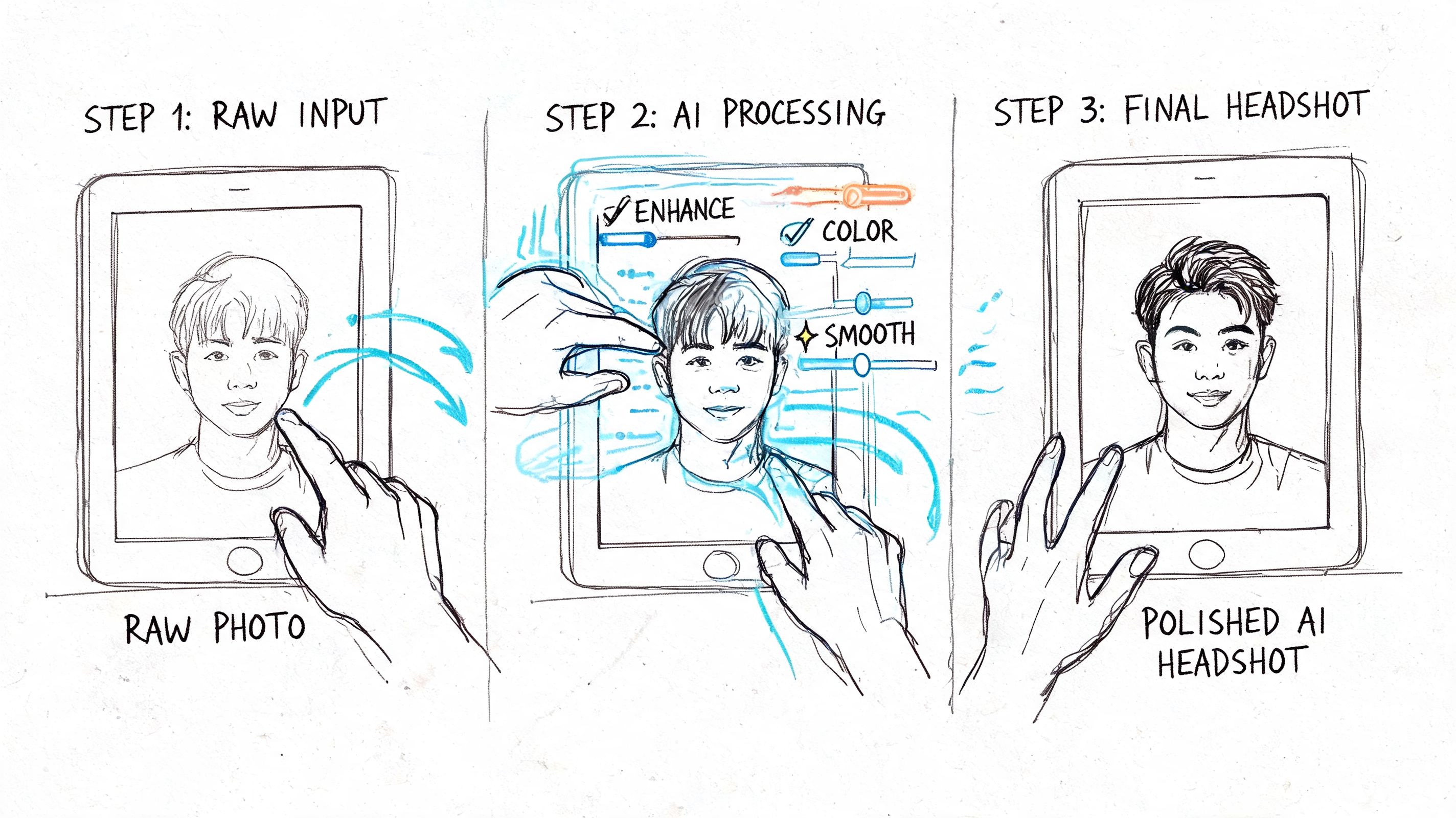
AI headshots work best when you treat them like a production workflow, not a magic trick. Authors who get believable results usually do two things well. They give the system clean inputs, and they choose styles that match how they already want to be perceived.
Feed the model better source photos
Bad source images create strange outputs. If your training selfies are inconsistent, heavily filtered, badly lit, or cropped too tightly, the final portraits often look generic or uncanny.
Use source photos that follow these rules:
- Good natural light: Window light is usually best.
- Clear face visibility: No sunglasses, no hair covering key features.
- Several angles: Straight-on, slight left, slight right.
- Neutral expressions first: Add a few with a soft smile, but don’t make every image exaggerated.
- Mixed backgrounds are fine: What matters most is that your face is clear and well lit.
- No beauty filters: AI doesn’t need another layer of distortion.
This is one place where authors often sabotage themselves. They upload social selfies that were never useful reference material to begin with.
Choose a style pack that fits your category
The second decision is style selection. Don’t just pick what looks attractive in isolation. Pick what helps your reader place you correctly.
A business author should lean toward clean, executive, or editorial looks. A novelist may choose more warmth or texture. A memoirist might want something intimate but still polished. An academic usually benefits from restraint.
The strongest AI outputs tend to come from prompts or style packs that are specific enough to guide tone, but not so theatrical that the final image looks invented.
If the AI result looks more stylish than your actual public presence, readers will feel the mismatch.
That doesn’t mean you should aim low. It means the photo should still look like a real version of you.
A quick walkthrough helps if this is your first time using the format:
Why AI has become a normal option
This isn’t fringe behavior anymore. A 2026 survey from PhotoPacksAI and The Harris Poll found that 44% of Americans would consider using AI for professional headshots, with Millennials at 55%. The same source says the top reasons are convenience at 38%, quality at 34%, and cost at 32%, and that 73% of recruiters cannot distinguish realistic AI-generated headshots from traditional photos.
That last point matters for authors. If the image looks polished, plausible, and aligned with your brand, most viewers won’t care how it was produced. They care whether it feels real and professional.
Review AI outputs like an editor
Don’t judge the batch by one image. Review the set the way you’d review draft cover concepts.
Keep the ones that do these jobs well:
- Resemblance: It looks like you on a strong day.
- Consistency: Hair, skin, features, and proportions feel natural.
- Brand fit: The tone supports your books and audience.
- Versatility: It can work on a website, retailer page, and speaker profile.
Reject anything with uncanny eyes, inconsistent hands if visible, over-smoothed skin, fake-looking teeth, or wardrobe details you’d never wear.
Used this way, AI isn’t a shortcut around standards. It’s a faster way to meet them.
Deploying Your Headshot and a Final Checklist
An author spends weeks polishing a website, updates the Amazon page, lands a podcast invite, and then sends over a tiny, overedited headshot pulled from social media. I have seen that mistake make a strong book look less credible in minutes.
A headshot starts earning its keep only after it is packaged for real use. That means keeping one master file for print, plus smaller exports for web, retailer pages, and speaker profiles. For print, use a high-resolution image sized to reproduce cleanly in standard placements such as book jackets, media kits, and event programs. For web, save lighter versions that still look sharp on phones and large desktop screens.
The format matters almost as much as the photo itself. A good image used inconsistently creates confusion. A slightly less dramatic image used everywhere usually performs better because readers, booksellers, podcasters, and event organizers recognize you immediately.
Where your author headshot should live
Use one primary headshot across your main platforms first.
- Author website: homepage, about page, and media kit
- Retail platforms: Amazon Author Central and other store bios
- Goodreads and social profiles: keep the same image or a clear variation from the same session
- Press materials: a downloadable file for festivals, podcasts, interviews, and guest articles
- Speaking pages: conference bios, workshop listings, and teaching profiles
A secondary image can help if you need a different crop or orientation. Keep it close in tone, wardrobe, and lighting. If one photo says thriller author and another says lifestyle influencer, the brand starts to wobble.
It is essential that traditional advice and the modern workflow come together. Whether your final image came from a photographer, a DIY setup, or an AI tool like FaceJam, deployment standards stay the same. It has to look like you, fit your genre, and work across every place someone checks before buying, booking, or inviting you.
Final quality check
Before you publish anything, review your headshot like a marketer, not like a nervous subject.
- Brand fit: does the image support your genre, topic, or authority position?
- Recognition: would a reader recognize you at a signing or conference?
- Expression: does your face communicate the right tone without looking stiff?
- Wardrobe: is the clothing current, simple, and free of distractions?
- Retouching: does the polish still look human?
- Cropping: do you have both vertical and square versions?
- File prep: do you have print-ready and web-ready exports?
- Consistency: does it match your site, bio, book cover style, and public presence?
The right author photo lowers friction. It helps a reader trust the person behind the book and move one step closer to buying, following, or reaching out.
If you want a faster, lower-stress way to create polished headshots for authors without booking a shoot, FaceJam is worth a look. It turns everyday selfies into professional-grade portraits with multiple style options, commercial ownership, and a workflow that suits authors who need strong images on a real budget and timeline.


